
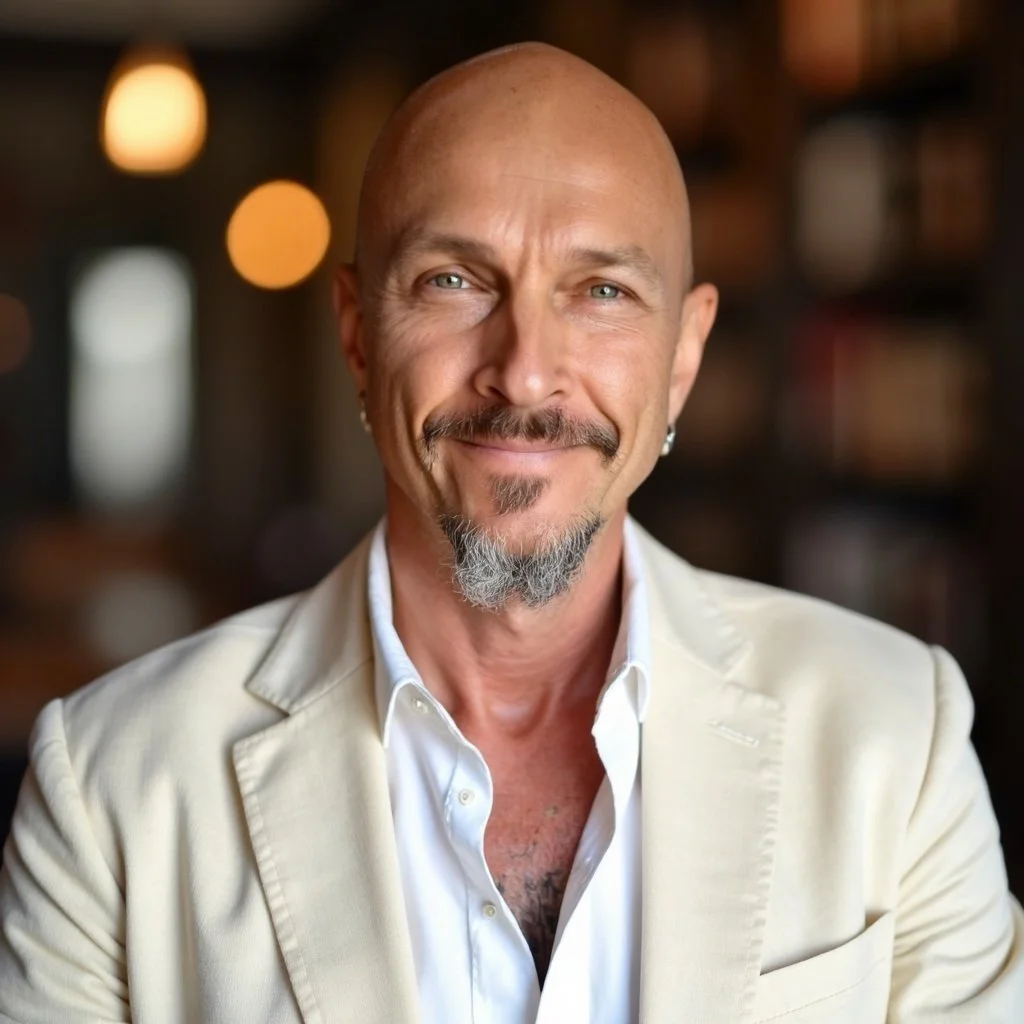
Welcome
If you're curious about Sergio N. Lialin and his practice, you’ll find a short audio just below.
Scroll a little further down and you’ll discover a fuller story—his biography, shaped by devotion, heartbreak, and the wild terrain of awakening.
And if you're seeking to understand the soul behind the work, he’s offered his Ethos of Guiding Beliefs at the bottom of this page.
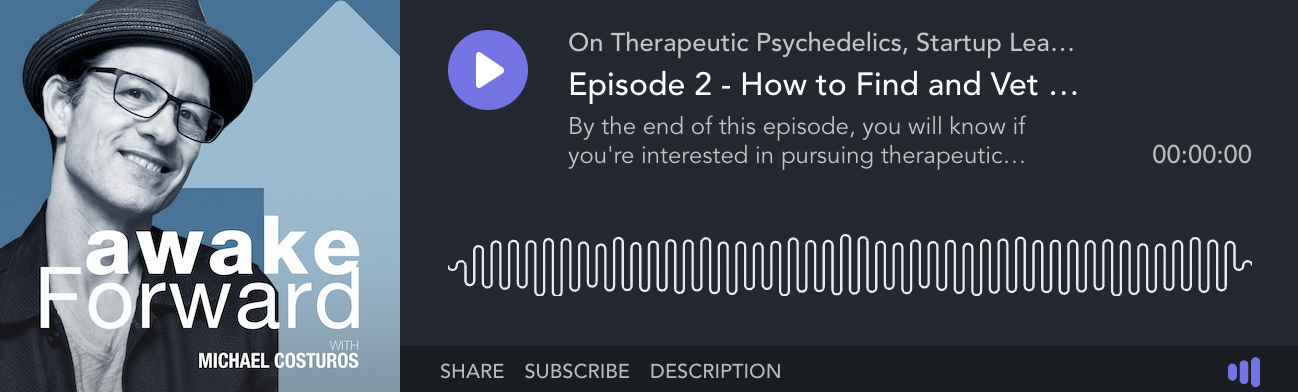
To hear Sergio talk about his practice
click here.
About Sergio Lialin
For much of modern life, healing has become fragmented.
Psychology is separated from spirituality. Science is separated from meaning. Expanded states are pursued without preparation, and profound experiences are often left without integration.
Sergio’s work exists in the space where those worlds begin to reconnect.
Sergio Lialin's work bridges indigenous healing traditions and contemporary psychological frameworks, bringing together ceremonial wisdom, modern psychology, and practical approaches to transformation and integration.
Sergio guides individuals through deep personal transformation using a framework that bridges psychedelic integration, IFS (Internal Family Systems), NLP (Neuro-Linguistic Programming), somatic awareness, ceremonial practice, and modern psychological insight. The focus here is not simply on having profound experiences, but on understanding how to metabolize them into real change—emotionally, relationally, spiritually, and practically.
For more than four decades, Sergio Lialin has explored the relationship between consciousness, healing, and human transformation. What began as personal exploration eventually became years of immersion in indigenous ceremonial traditions throughout Mexico, Peru, Brazil, and Colombia, alongside extensive work in integrative coaching, parts work, breath-work, and transformational psychology.
Over time, he came to understand something essential:
The medicine is not the healing.
The healing comes through preparation, safety, insight, relationship, embodiment, and integration. It comes through learning how to listen differently to ourselves and to life.
His approach is grounded, deeply human, and informed by both lived experience and years of supporting others through transformational processes. Some people come to this work seeking healing. Others arrive in periods of transition, spiritual awakening, grief, relationship rupture, creative emergence, or a desire to reconnect with meaning and authenticity.
Together, you create space to explore what is asking to be seen, understood, integrated, or remembered.
Sergio Lialin’s work may include:
Psychedelic preparation and integration
Transformational coaching
IFS (Internal Family Systems)-informed exploration
NLP (Neuro-Linguistic Programming) and belief-pattern work
Ceremony and ritual guidance
Somatic and emotional integration
Mentorship for emerging facilitators and guides
At the heart of all of this is a simple understanding:
You are not broken.
Often, beneath the anxiety, protection, trauma, conditioning, and survival strategies, there is something deeper attempting to emerge—something whole, aware, and profoundly alive.
His role is not to tell you who to become.
It is to help create the conditions where you can more fully remember who you already are.
If this work resonates with you, the conversation is welcome.
Contact Sergio Nikita Lialin:
PsychedelicTherapyCoaching@proton.me
Adapted from: Code of Ethics for Spiritual Guides
My Ethos of Guiding Beliefs & Principles
1. Respect for the autonomy and dignity of the person
As a spiritual guide, I respect the autonomy and dignity of the person seeking guidance and I treat them as a whole person, with their own unique experiences, thoughts, and feelings. I pay attention to power dynamics and avoid any behavior that might be coercive or manipulative.
2. Non-maleficence and beneficence
Non-maleficence and beneficence are the principles of doing no harm and promoting good, and so, as a spiritual guide, I prioritize the well-being of the person seeking guidance and avoid causing harm to them. I bring awareness to potential risks and take steps to mitigate them, and do everything possible to support the person's healing and growth.
3. Responsibility and accountability
As a spiritual guide, I take responsibility for my actions and I am accountable for my decisions. I am transparent about my qualifications, my training, and my experience. I am honest and straightforward in my interactions with clients.
4. Professionalism and integrity
Professionalism and integrity are key components of my ethical practice, and as a spiritual guide, I maintain professional boundaries and avoid any behavior that might compromise my integrity or the integrity of the practice. This means being honest, transparent, and respectful at all times.
7. Informed consent and transparency.
I hold that informed consent and transparency are critical for building trust and maintaining ethical practices, and I, thus, strive to be clear and transparent about the nature of the work, the risks and benefits involved, and any other relevant information that might help the person make an informed decision.
10. Collaborative relationships and respectful communication.
I choose to build strong and effective partnerships with my clients. As a spiritual guide, I establish a collaborative and respectful relationship with the person seeking guidance and communicate openly and honestly throughout the process.
5. Cultural competence and humility
Cultural competence and humility are important for working with people from different backgrounds and cultures, and as a guide, I strive to be aware of my own biases and assumptions, as well as to be respectful and understanding of the beliefs and practices of others.
8. Confidentiality and privacy.
Confidentiality and privacy are essential for building trust and creating a safe space for clients. As a spiritual guide, I respect the confidentiality and privacy of the person seeking guidance, and only share information with others when necessary and only with the person's explicit consent.
6. Non-discrimination and inclusivity
As a spiritual guide, I hold that non-discrimination and inclusivity are essential for creating a welcoming and supportive environment for all my clients, and I avoid any behavior that might be discriminatory or exclusionary, and create a safe and inclusive space for people of all races, genders, sexual orientations, and abilities.
9. Continuing education and self-reflection.
As a spiritual guide, I continue learning and growing and staying up-to-date with the latest research and best practices in the field (as best I can), and I am open to feedback and self-reflection for ongoing personal growth and development.
